

Latest
Story
10 June 2026
Australian and New Zealand High Commissions Observe the UN’s Peacebuilding and Development Efforts in the Highlands
Learn more
Press Release
21 April 2026
Newly appointed United Nations Resident Coordinator Ms. Shalini Bahuguna presents her credentials to Prime Minister Marape
Learn more
Story
01 April 2026
Secretary‑General appoints Shalini Bahuguna of India as the United Nations Resident Coordinator in Papua New Guinea
Learn more
Latest
The Sustainable Development Goals in Papua New Guinea
The Sustainable Development Goals are a global call to action to end poverty, protect the earth’s environment and climate, and ensure that people everywhere can enjoy peace and prosperity. These are the goals the UN is working on in Papua New Guinea:
Publication
07 April 2025
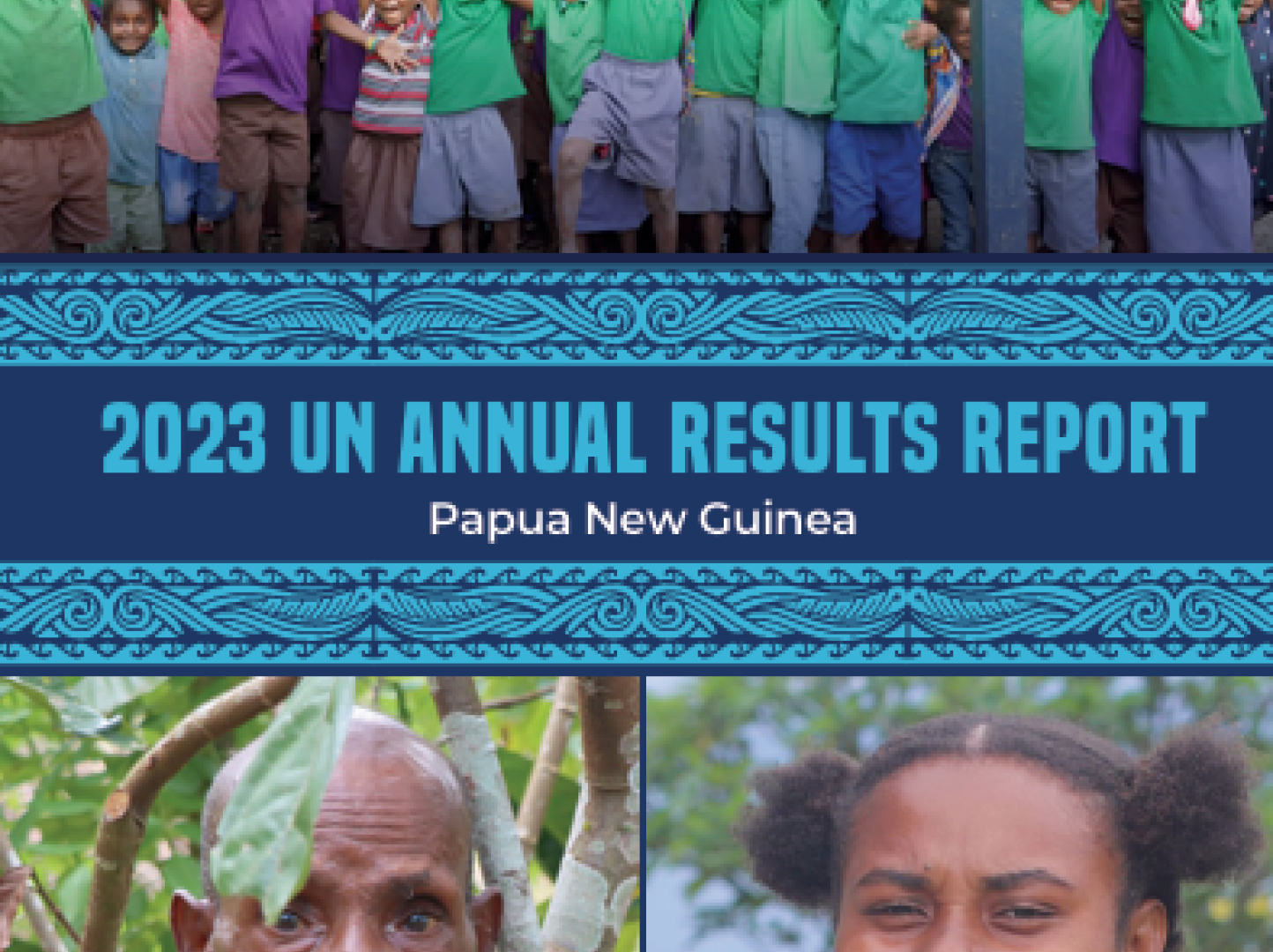
Annual Results Report 2024
The United Nations is pleased to share the 2024 Annual Results Report, marking a significant milestone in Papua New Guinea's development journey. This year represents the first phase of implementing the United Nations Sustainable Development Cooperation Framework (UNSDCF) 2024–2028 and coincides with the second year of PNG’s Medium Term Development Plan IV 2023-2027, as well as a decade of commitment to the 2030 Agenda for Sustainable Development. As we reflect on our collective efforts, it is essential to acknowledge the invaluable partnership between the Government of Papua New Guinea and the United Nations, which has been critical in advancing the Sustainable Development Goals (SDGs) across the nation. While there have been commendable achievements in various sectors, significant challenges remain that require urgent attention and accelerated action. This report outlines the key accomplishments and ongoing initiatives that demonstrate our shared commitment to fostering sustainable development and enhancing the quality of life for all Papua New Guineans.
1 of 5

Story
16 August 2024
UN Papua New Guinea Advocacy Note: Promoting Safe and Dignified Relocations and Parameters for Managing Risks - August 2024
The landslide in the Maip Mulitaka region of Enga Province, Papua New Guinea on May 24, 2024 caused significant damage and fatalities, impacting approximately 9,900 individuals from 1,990 households. Of these, 1,680 individuals from 348 households displaced. In response, the United Nations (UN) in Papua New Guinea has provided lifesaving assistance to affected communities, including the provision of food assistance, shelter kits, non-food items, health support and mental health and psychosocial assistance to affected households, in coordination with the Provincial Disaster Committee (PDC).Following the Enga Provincial Government – Provincial Disaster Committee’s “Declaration of Mass Evacuation” on 6 June 2024, the UN acknowledges the risks posed by future natural hazard-induced disasters in the Enga Province and the Government of Papua New Guinea’s recommendation for evacuation and relocation to avoid further human, material, and economic losses. The UN recognizes the commitment of the Government of Papua New Guinea to protect the rights and safety of all its citizens, including their right to achieve durable solutions to their current displacement. The UN is committed to ensuring the safety and well-being of internally displaced persons (IDPs) throughout all phases of displacement, including relocation where return-to-areas-of-origin is not feasible. The UN affirms its support to all efforts which bring an end to displacement and promote lasting solutions for displaced persons where the conducive conditions for safe, voluntary, and dignified relocation are in place. In efforts to ensure relocation interventions centralize the protection of civilians through rights based dignified interventions that uphold the physical, material, and legal safety of affected individuals, and in adherence to international human rights law, humanitarian principles, and in contribution to the UN Secretary General Action Agenda on internal displacement, the International Organization for Migration (IOM) Papua New Guinea under the auspices of the UN in Papua New Guinea here by recommends the following safeguarding guidelines in order for relocations to be considered principled, in adherence to international human rights law, humanitarian principles, and in contribution to the UN Secretary General Action Agenda on internal displacement:Voluntariness: Relocations should be undertaken voluntarily, without any form of coercion or inducements such as withholding aid or arbitrary detention.Informed Consent: Internally Displaced Persons (IDPs) must be provided with comprehensive information regarding relocation areas, available services, and overall plans well in advance to make informed decisions.Non-Discrimination: All services and support should be provided impartially, ensuring equal treatment regardless of ethnic or tribal identity.Safety and Compliance: Relocations must prioritize the physical, material and legal safety of IDPs, comply with legal standards, and ensure equal access to essential services.Dignity: Human dignity must be upheld throughout the relocation process, allowing IDPs to make choices and ensuring accountability.Inclusive Processes: Community involvement and consultations are crucial, considering the rights and needs of both IDPs and host communities.Safety Measures: Special measures should be implemented to safeguard the safety and security of IDPs, especially in areas prone to conflicts, to prevent harm and further tensions. The UN stands ready to support in mainstreaming the aforementioned guidelines during all phases of relocation: prior to relocation, during, and after. A coordinated and facilitated relocation abiding by the above safeguarding principles and practices, will enable a people-centred, inclusive, and participatory process, allowing all affected population and host communities to improve, or at minimum, maintain their living standards and opportunities and mitigate adverse impacts of relocation.
1 of 5

Story
13 August 2024
United Efforts to Address Mulitaka Displacement in Enga Province, Papua New Guinea - August 2024
A significant stride in tackling the Mulitaka displacement crisis was made with the successful conduct of a joint planning workshop on Solutions to Internal Displacement.This pivotal event united diverse stakeholders to formulate solutions for communities affected by the Mulitaka landslide disaster in Enga province in Papua New Guinea (PNG).Held in Wabag town on 7 August, the workshop drew 39 men and 11 women participants, including representatives from the Enga Provincial Government, National Disaster Center, district authorities, PNG Red Cross Society, Non-Governmental Organizations, faith-based organizations, local community leaders from the disaster affected areas, civil society organizations, media, and the United Nations.Organized by the Enga Provincial Government in partnership with the United Nations, and with technical support from the International Organization for Migration (IOM), the workshop aimed to foster a coordinated approach to better address the landslide disaster. The event served as a platform for in-depth discussions on durable solutions for the internally displaced persons. Key topics included an overview of the current situation, displacement figures, the status of interventions, and the presentation of the government’s recovery plan. The recovery plan was developed with technical support from UNDP."This workshop represents a critical step in our collective efforts to address the displacement crisis in Mulitaka. Our goal is to ensure that every action we take is rooted in collaboration and geared towards providing lasting solutions for the affected communities," said Laso Mana, Acting Director of the National Disaster Centre, while emphasizing the workshop's significance.Enga Provincial Administrator, Sandis Tsaka, echoed this sentiment. "Today's discussions highlight our shared commitment to tackling the challenges faced by the displaced populations. By working together, we can overcome the obstacles and implement effective solutions that will bring stability to those in need," he highlighted.The workshop marked a pivotal moment in the ongoing response to the Mulitaka landslide, highlighting a united effort among national, provincial, district, local level, and international partners to develop and implement protection-centric, and sustainable interventions.The outcomes of this workshop will guide the implementation of targeted actions to support the communities affected by the Mulitaka landslide. The collaborative efforts and shared commitment demonstrated during the workshop underscore the importance of partnership in disaster response, and post crises interventions.Funded by the United States Agency for International Development’s Bureau for Humanitarian Assistance, the successful completion of the joint planning workshop on Solutions to Internal Displacement signifies a robust and unified actions to the Mulitaka disaster.
***
For further information, please contact IOM Port Moresby:
Mr. Peter Murorera, Tel: +675 321 36 55, Email: pmurorera@iom.int
Ms. Anne Mandal, Tel: +675 72026763, Email: amandal@iom.int About the Joint Planning Workshop:
The Joint Planning Workshop for Solutions to Mulitaka Displacement was convened to address the solutions to the Mulitaka landslide disaster. It focused on developing collaborative strategies for durable solutions and ensuring coordinated responses among key stakeholders.
***
For further information, please contact IOM Port Moresby:
Mr. Peter Murorera, Tel: +675 321 36 55, Email: pmurorera@iom.int
Ms. Anne Mandal, Tel: +675 72026763, Email: amandal@iom.int About the Joint Planning Workshop:
The Joint Planning Workshop for Solutions to Mulitaka Displacement was convened to address the solutions to the Mulitaka landslide disaster. It focused on developing collaborative strategies for durable solutions and ensuring coordinated responses among key stakeholders.
1 of 5
Story
05 July 2024
E-Waste Management Stakeholder Workshops Held to Advance Sustainable Waste Management in Papua New Guinea
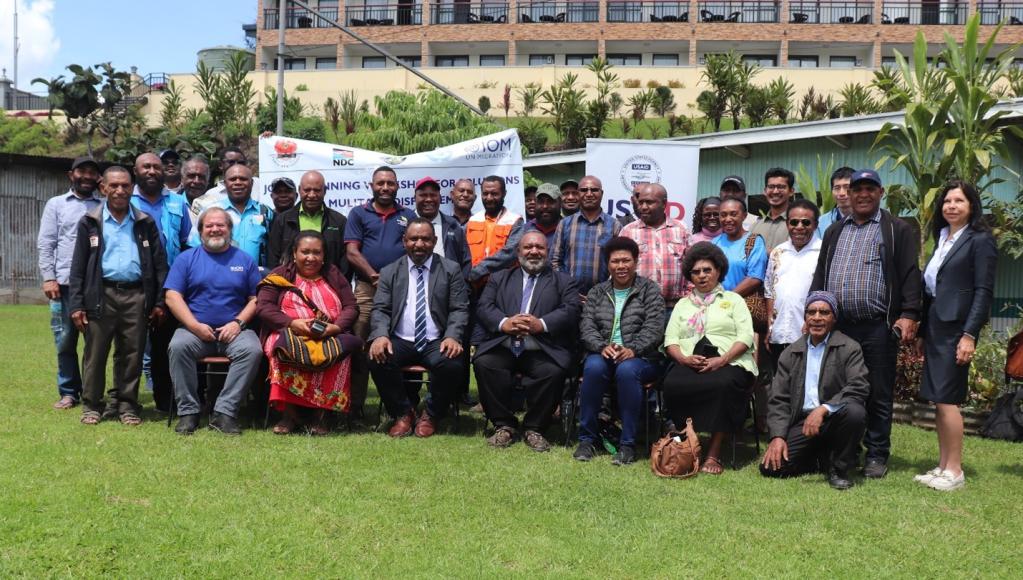
The United Nations Office for Project Services (UNOPS) in partnership with the Australian Government is supporting Government of Papua New Guinea’s efforts to develop sustainable solutions for electronic waste management in the main urban centers.In July 2024, UNOPS conducted a series of e-waste management stakeholder workshops in Port Moresby, Lae, and Mount Hagen, gathering over 50 participants from various stakeholders in the PNG government, development partners, and industry representatives to discuss responsible e-waste management in the country. In her opening remarks, UNOPS Country Manager for PNG, Ms Joeena Simpson, gave a background on UNOPS function and its establishment in PNG and an overview of the e-waste project and its conception in consultation with the Deputy Prime Minister's Office. “UNOPS is proud to partner with the Australian Government and the Government of Papua New Guinea to support a responsible and managed approach to a cleaner and greener future for the people of Papua New Guinea. Focusing on environmental protection, community health and economic opportunities enabled through e-waste management, we aim to reduce serious contaminants in waterways and on land.” Chief of Staff from the Office of the Deputy Prime Minister, Mr Sione Paasia, highlighted the significance of this initiative for PNG sustainable development. The workshops featured National Engineering Services Pakistan (Pvt.) Limited (NESPAK) presentation on the key findings of their feasibility studies conducted in Port Moresby, Lae and Mt Hagen in 2023 followed by group discussions on the impact of e-waste, and what the challenges and key priority areas are for PNG in achieving e-waste management by 2030 both at the national and local levels. Discussions also focused on leveraging the economic opportunities presented by proper e-waste management through a circular economy approach and the resulting job creation opportunities. //ENDS.Media Contact: Zekun Shi, Communications Officer, UNOPS South East Asia and Pacific, zekuns@unops.org
1 of 5
Story
30 August 2023
Social and Environmental Standards Validation Workshop in Kokopo, East New Britain Province
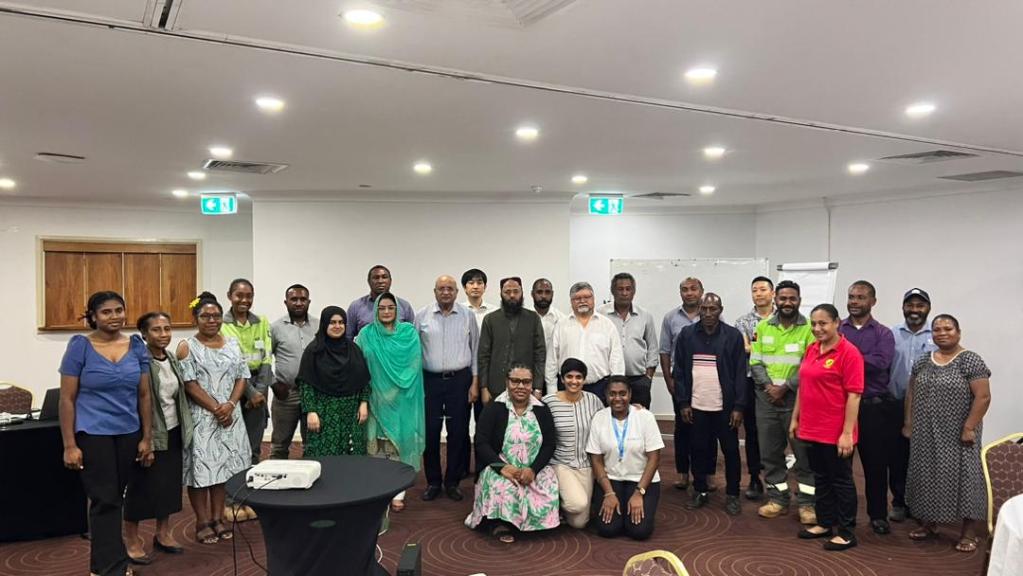
The Workshop is currently underway for the GEF7 FOLUR Project in Kokopo, East New Britain (ENB) Province from the 28th of August to the 02nd of September 2023.
Between March and April this year, project data collectors which consisted of UNDP and provincial Administration staff travelled to Inland Baining and in Central Pomio LLGs visiting communities and introducing them to the GEF7 FOLUR Project through a stakeholder engagement process.
During these visits, valuable social and environmental information were collected and developed into a Social and Environmental Management Plan, an Indigenous People’s Plan and a Gender Action Plan.
These are important documents that UNDP and its Implementation Partner, CEPA, will utilize to ensure the natural environment and the rights of the communities are protected appropriately during project implementation.
The purpose of the workshop this week is to validate the information collected and allow community representatives and government officials to provide critical feedbacks that will guide the GEF7 FOLUR Project moving forward.
////////
1 of 5
Story
10 June 2026
Australian and New Zealand High Commissions Observe the UN’s Peacebuilding and Development Efforts in the Highlands
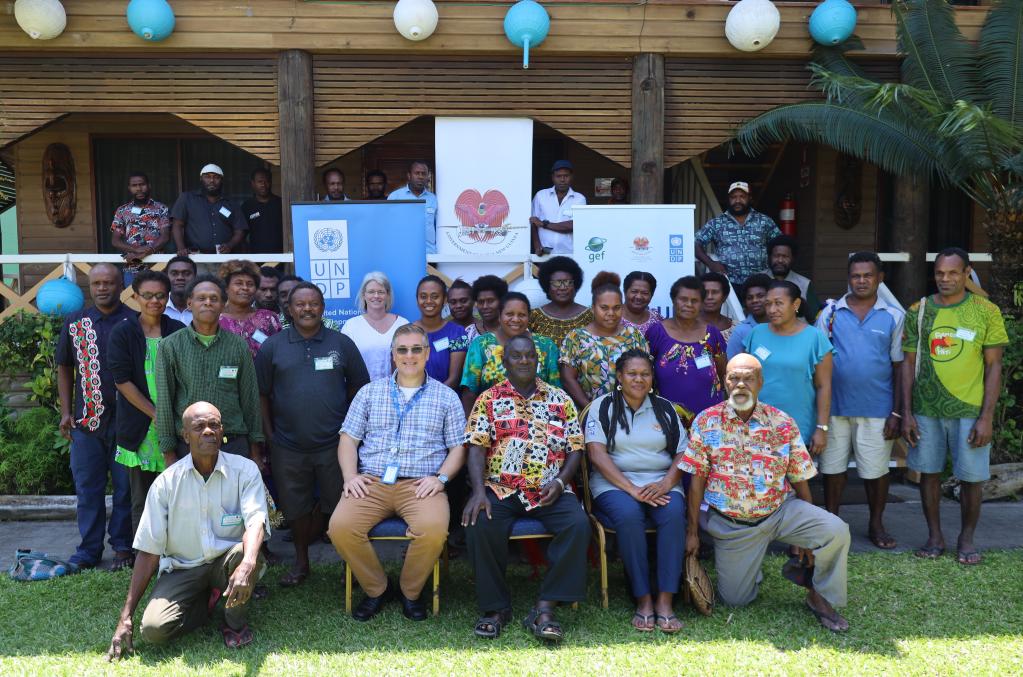
This week, representatives from the High Commissions of Australia and New Zealand in Papua New Guinea visited Western Highlands Province to observe how communities are benefiting from coordinated United Nations efforts to improve livelihoods, strengthen essential services, and promote peace in the Highlands of Papua New Guinea. The visit focused on the Highlands Joint Programme II (HJP II), a collaborative initiative that brings together eight UN agencies to support the government of PNG with peace, stability, and inclusive development in communities affected by tribal conflict, gender-based violence, and climate-related risks in Western Highlands, Southern Highlands, Enga and Hela provinces. The delegation met with provincial authorities and UN agencies to learn about progress under the programme and paid visits to communities and public services to hear first-hand accounts of how the programme is improving lives at the community level.A key stop was the Western Highlands Provincial Hospital, where delegates observed efforts to strengthen birth registration services. The initiative aims to help more mothers and families register births directly at the point of service, facilitating legal recognition of a child and realizing their basic human rights. Another highlight of the mission was a visit to Kelua II ward 3, a community of over 7,000 people facing multiple challenges ranging from land disputes and climate-related shocks to limited livelihoods opportunities and public services.During the visit, a community representative of Kelua II highlighted the development and launch of the community-based disaster risk management plan with support of the Highlands Joint Programme II in 2025. The delegation also witnessed mobile civil registration services reaching residents, including internally displaced persons, to facilitate their civil registration and acquisition of legal identity documentation with the Papua New Guinea Civil & Identity Registry, to enable access to health, education, and other essential services.The delegation also learned about Kelua II’s significant potential as a spice processing hub for the entire region. The ward already hosts a spice processing unit that sources products from four province and the Highlands Joint Programme II plans to build on this comparative advantage by supporting farmer cooperatives, strengthening value chains and market access, and expanding inclusive livelihoods opportunities for women, youth and displaced populations. The programme partners also held discussions on ongoing efforts to address gender-based violence, sorcery accusation-related violence, and other challenges affecting the region’s women, youth and other vulnerable groups. The discussions emphasized the importance of strong partnerships between government, communities, development partners, and the United Nations in supporting long-term peace and development outcomes.New Zealand Deputy High Commissioner Charlie Gillard, who joined the visit, expressed appreciation for the work of the programme: “New Zealand is proud to be contributing to the Highlands Joint Programme, which is delivering practical improvements in people’s lives, particularly for vulnerable communities” Mr Gillard said. “A key strength of the programme is its integrated, locally led approach, bringing different agencies and stakeholders together around shared goals, that bring impact for Highlands communities.”Moreover, Ms. Natalie Hogg, the Second Secretary of the Australian High Commission, commended the provincial authorities for demonstrating strong ownership over the programme and highlighted the need to continue aligning the community-level interventions with provincial plans: "What stands out in this programme is the strong focus on building and strengthening Papua New Guinea's own systems and coordination mechanisms. Sustainable peace and development require structures that continue to work long after individual activities are completed. It is encouraging to see the strong ownership demonstrated by provincial authorities and communities, because it is ultimately their commitment and leadership that will sustain these efforts into the future,” she stated. The visit demonstrated the continued commitment of New Zealand and Australia to working alongside Papua New Guinea, provincial leaders, UN partners, and communities to promote and create inclusive growth and strengthen stability across the Highlands.For more information, please contact: Juho Valta | Head of Communications, UNDP, PNG | juho.emil.aleksi.valta@undp.org
1 of 5

Story
01 April 2026
Secretary‑General appoints Shalini Bahuguna of India as the United Nations Resident Coordinator in Papua New Guinea
United Nations Secretary‑General António Guterres appointed Ms. Shalini Bahuguna of India as the United Nations Resident Coordinator in Papua New Guinea, with the host Government’s approval. She takes up her post today, 1 April.Ms. Bahuguna brings more than 20 years of experience in leading multi‑disciplinary and culturally diverse teams in development, humanitarian, transitional, post‑conflict and peacebuilding contexts across Asia and Africa. She most recently facilitated the development of the Artificial Intelligence strategy of the United Nations Children’s Fund (UNICEF) in partnership with Accenture. She has also served as UNICEF Representative in Tanzania, where she oversaw programmes supporting national development priorities and strengthened partnerships to advance child rights. She took on this role after working as UNICEF Deputy Representative in Ethiopia and Myanmar, as well as Chief of Social Policy and Gender with UNICEF Nigeria.Prior to joining the United Nations, Ms. Bahuguna worked as an aid manager and social development professional with the United Kingdom’s Department for International Development (DFID) in India, China, Indonesia and Afghanistan. She began her career with a water and sanitation non‑governmental organization in India and later supported the Government of India and the World Bank water sector reform programme.Ms. Bahuguna holds a master’s degree in development economics and international development from the University of Swansea in the United Kingdom.She is married and has one daughter.
1 of 5

Story
01 December 2025
Reehana Raza, IFAD Regional Director for Asia and the Pacific, visits Papua New Guinea to review progress and deepen partnerships
Port Moresby, 24 November 2025. Reehana Raza, Regional Director for Asia and the Pacific at the International Fund for Agricultural Development (IFAD), visited Papua New Guinea from 17-22 November to review progress of the US$46.8 million Market for Village Farmers (MVF) project in the country. She also met key government counterparts at the Department of Agriculture and Livestock, Secretary Sergie Bang, and the Department of Treasury, Secretary Andrew Oaeke.MVF, financed by an IFAD loan of US$25.5 million and US$2.85 million from the Government of PNG (the rest contributed by project participants, financial institutions and provincial and district governments), is a major agricultural investment aiming to enhance the livelihoods of village farming households by helping them transition from semi-subsistence agriculture to market-oriented production and farming as a business. “The MVF Project has shown remarkable progress over the past year. We are now focused on translating that positive momentum into tangible results on the ground, especially by delivering better access through vital feeder roads and securing robust business partnerships,” said Raza. “We are committed to working closely with the Government of PNG to ensure that village farmers can efficiently take their produce to market and significantly boost their incomes,” she added.MVF covers seven provinces – Western Highlands, Jiwaka, Simbu, Eastern Highlands, Morobe, and East New Britain and Madang – supporting value chains for fresh produce and galip nuts, targeting 23,500 farming households and directly benefiting around 117,500 people. These areas are characterized by high poverty levels, low literacy and high malnutrition rates. It focuses on promoting inclusive business partnerships that can provide secure and remunerative market options for farmers, ensuring a reliable supply chain, and pushes for swift spot improvements on critical feeder roads to improve market access – essential to reduce post-harvest losses and maximize returns for farmers.MVF demonstrates encouraging results. A 2023 estimate suggests that there has been a 65 per cent increase in the percentage of produce sold by farmers participating in the project. This has been as the result of small matching grants that increase the capacity of farmers to receive required inputs and of the improved capacity of business partners to provide technical and marketing support to the participating farmers.At the largest Small Island Developing State (SIDS) in the Pacific region, PNG is critical to IFAD’s SIDS Strategy 2022. According to 2025 estimates by the Asian Development Bank, the poverty rate in PNG is 39 per cent. The fresh food sector is critical for PNG for domestic food and nutrition security. Since 1983, IFAD has supported 5 projects in PNG, investing US$74 million to a portfolio value of US$193 million and reaching 112,240 households.Read more about our work in PNG hereFor more information, please contact:Yamini Lohia | Regional Communications Officer, Asia-Pacific, IFAD | y.lohia@ifad.org
1 of 5

Story
31 October 2025
National Consultation Workshop Convenes Provincial Stakeholders to Review Papua New Guinea’s Disaster and Emergency Response Mechanism
Port Moresby, Papua New Guinea | October 2025 — In a significant step toward enhancing national resilience, senior government officials, Provincial Administrators, and Provincial Disaster Coordinators from across Papua New Guinea convened in Port Moresby for a one-day National Consultation Workshop on the Review of the Disaster and Emergency Response Mechanism.The workshop, organized and led by a government-mandated Review Committee, brought together provincial stakeholders to contribute to the Government’s ongoing efforts to strengthen the national disaster management framework. This initiative reflects Papua New Guinea’s commitment to building a more coordinated, responsive, and future-ready disaster governance system.In his opening remarks, Mr. Laso Mana, Acting Director of the National Disaster Centre, acknowledged the dedication of participants and the enduring support of development partners:“We are now facing increasingly complex and frequent disasters — from earthquakes, floods, and landslides, to droughts, cyclones, and health emergencies. These challenges demand a legislative and policy framework that is modern, inclusive, and responsive to emerging risks, while empowering our provinces and districts to act swiftly and effectively. Thank you to everyone present today for your continued efforts to protect the lives and livelihoods of communities. I also extend my appreciation to our partners and donors — including the Governments of New Zealand, Australia, and the United States — for their steadfast support.”The workshop focused on reviewing the current disaster and emergency response mechanism, assessing institutional roles, and identifying opportunities to improve coordination, resource allocation, and legal frameworks. Participants also took part in thematic discussions focused on risk reduction, readiness, response, and recovery.Interactive sessions and group discussions enabled provincial stakeholders to share local experiences and propose actionable recommendations to enhance disaster governance and operational readiness at all levels. Mr. Ray Paul, Chairman of the Review Committee, emphasized the importance of collaborative dialogue:“We began this consultation process with various groups of partners and stakeholders, and one thing we all agreed on was the importance of collaboration. Bringing everyone together allows us to have a rich exchange of ideas and insights. I want to thank all our partners, donors, and our dedicated national and provincial disaster management teams, as well as the International Organization for Migration (IOM), for their continued support.”The International Organization for Migration (IOM) has been working in close partnership with the National Disaster Centre and Provincial Disaster Centres across Papua New Guinea to strengthen disaster preparedness, mitigation, response, and recovery systems. Through technical support, capacity building, and community engagement, IOM has played a key role in advancing the country’s disaster risk management initiatives.Mr. David Arnold, IOM Chief of Mission, reaffirmed IOM’s long-standing commitment to supporting the Government of Papua New Guinea:“This workshop marks a critical step in strengthening Papua New Guinea’s disaster management system. Preparedness must begin at the community level and be supported by strong national coordination. IOM remains committed to working hand-in-hand with the Government, communities, and partners to build a disaster response framework that is resilient, collaborative, and future-ready — one that protects every Papua New Guinean.”Findings and recommendations from this national consultation will inform the Review Committee’s final report and guide the ongoing review of Papua New Guinea’s national disaster management policy and legislative framework, with the aim of strengthening disaster risk management across the country.The Review Committee will continue engaging with stakeholders and partners to promote evidence-based policymaking and collaborative disaster governance that enhances national resilience.The workshop was funded by the United States Government under the IOM-led project, “Addressing the Drivers and Consequences of Disaster Displacement Through Enhancing Resilience in Papua New Guinea.”
1 of 5
Story
29 October 2025
UN Day marked with Renewed Commitment to Global Partnership and Peace
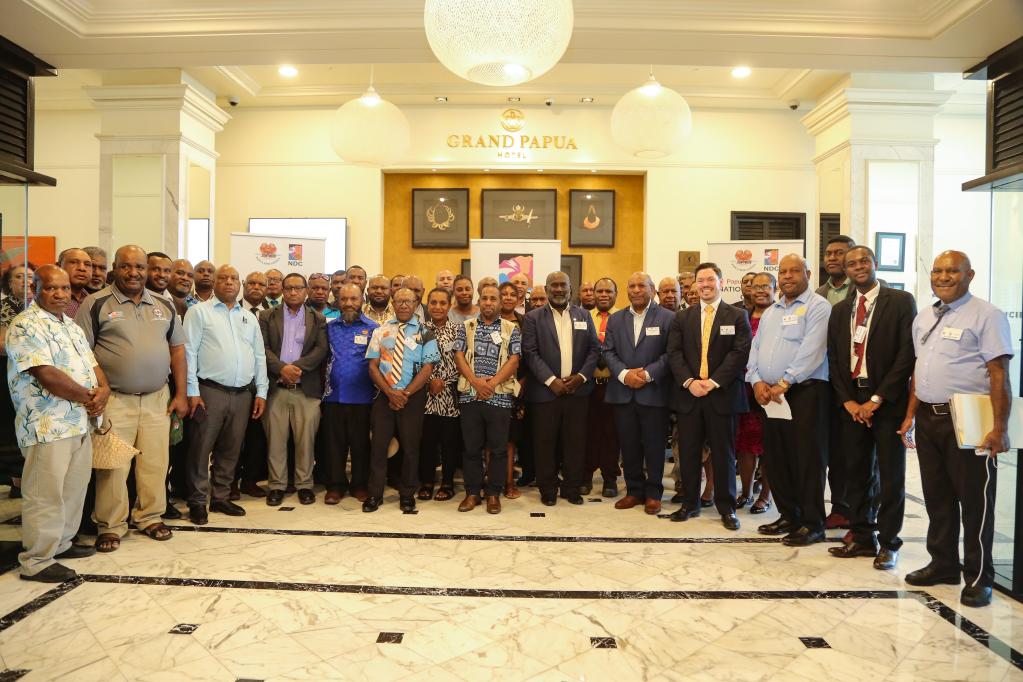
The United Nations in Papua New Guinea joined the global community in commemorating UN Day on 24 October 2025, with a celebratory event held in Port Moresby, reflecting on 50 years of partnership, peacebuilding, and shared development goals.At this event were representatives of UN agencies in the country, heads of missions, representatives of the UN’s partner organizations and distinguished members of parliament, including the Prime Minister of Papua New Guinea, Hon. James Marape, Hon. Justin Tkatchenko, Minister for Foreign Affairs, Hon. Powas Parkop, Governor for the National Capital District, Hon. Joe Sungi, Minister for Public Services, and Hon. Soroi Eoe, Minister for Provincial and Local Level Government Affairs.In his keynote address, Minister Eoe reaffirmed Papua New Guinea’s enduring commitment to the United Nations and its Charter, “When our flag was raised in 1975, the UN did not merely recognise Papua New Guinea — it welcomed us home. We stand for peaceful co-existence, respect for human rights, and sustainable development that leaves no one behind.”Minister Eoe highlighted PNG’s leadership on global challenges, including climate change, forest and ocean stewardship, and fair trade in natural resources. He praised the UN’s practical support in times of crisis — from health emergencies to natural disasters — and acknowledged its pivotal role in peacebuilding, especially in Bougainville.The Minister also reflected on the historic visit of UN Secretary-General António Guterres last month, the first by a sitting UN chief to Papua New Guinea. The Secretary-General’s engagements in West Sepik and Western Highlands showcased the resilience and diversity of the nation and emphasised PNG’s growing influence in the Pacific and beyond.UN Resident Coordinator in PNG, Mr Richard Howard, addressed the gathering and paid tribute to the founding vision of late Grand Chief Sir Michael Somare, who in 1975 called for PNG’s national identity to be built hand-in-hand with the global community.Mr Howard acknowledged the evolving challenges facing multilateralism and emphasized the importance of the UN80 initiative — a reform effort aimed at improving the UN’s efficiency, responsiveness, and impact. “The expectation is that we continue to do better going forward,” he said. “We must adapt to deliver more effectively for member states.”He praised PNG’s leadership in peace building, citing the Bougainville Peace Agreement and the recent Melanesian Agreement signed in Burnham as global models of dialogue and reconciliation. “The next phase of the Bougainville process must deliver a win-win solution that meets the aspirations of both parties,” Mr Howard said, reaffirming the UN’s role as a neutral and supportive partner.Mr Howard highlighted the endorsement of the National Prevention Strategy and the importance of peaceful community relations as a foundation for progress in health, education, clean water, and sanitation. He also commended PNG’s environmental leadership and its strong voice for climate justice on the world stage.Closing his remarks, Mr Howard reminded attendees that the UN is not a foreign entity but a collaborative partner. “You are part of the UN,” he said. “We are here to support you in ways that respect your sovereignty, your strengths, and your local context.”As Papua New Guinea celebrates 50 years of UN membership, both speakers called on citizens — especially youth — to embrace global citizenship through local leadership, peace, and inclusive development.
1 of 5

Press Release
21 April 2026
Newly appointed United Nations Resident Coordinator Ms. Shalini Bahuguna presents her credentials to Prime Minister Marape
Port Moresby, 21 April 2026 — The newly appointed United Nations (UN) Resident Coordinator in Papua New Guinea (PNG), Ms. Shalini Bahuguna, was honored and privileged to present her Letter of Credence from the United Nations Secretary General, Antonio Guterres, to the Prime Minister of Papua New Guinea, Rt. Hon. James Marape, marking the formal commencement of her term in the country. The official presentation took place at the Office of the Prime Minister in Port Moresby and was attended by Prime Minister Marape, Minister for Foreign Affairs, Hon. Justin Tkatchenko, Chief Secretary Ivan Pomaleu and witnessed by government officials.In his address, Prime Minister Marape congratulated Ms. Bahuguna on her appointment and welcomed her to Papua New Guinea, noting the strong partnership between the country and the United Nations. Reflecting on his engagement with past Resident Coordinators, he expressed optimism for continued close collaboration during her tenure.Ms. Bahuguna thanked the Prime Minister and his Government for the warm welcome and conveyed greetings from the United Nations Secretary General to the Government and people of Papua New Guinea. In presenting her credentials, Ms. Bahuguna reaffirmed the UN’s full support to the Government, remarking on the country’s exceptional natural and human wealth, and commending Prime Minister Marape on championing multilateralism:“PNG is a beautiful country; I see richness in the environment and the people. Together, we will continue to support national priorities through coordinated and inclusive action that delivers results for all”.During the meeting, Prime Minister Marape and Ms. Bahuguna exchanged views on strengthening cooperation across key priority areas, including sustainable development, gender equality, disaster preparedness, climate resilience and biodiversity protection, continued dialogue on the Bougainville peace process, and investing in the people of Papua New Guinea. These areas of collaboration are anchored within the United Nations Sustainable Development Cooperation Framework (UNSDCF) 2024–2028, now in its third year of implementation, and aligned with Papua New Guinea’s development agenda, the 2030 Agenda for Sustainable Development, and Reset 50.As the Resident Coordinator, Ms. Bahuguna is the representative of the UN Secretary General in PNG and leads the UN Country Team, comprising 21 resident and non-resident UN agencies, funds, and programmes. She has more than 20 years of experience within the United Nations system, leading multidisciplinary teams across development, humanitarian, post conflict, and peace-building contexts in Asia and Africa and has held senior leadership roles with United Nations International Children’s Emergency Fund (UNICEF).Ms. Bahuguna assumed her role on 1 April, succeeding her predecessor, Dr. Richard Howard. She looks forward to building on the strong foundation established by Dr. Howard and previous Resident Coordinators, while further strengthening the United Nations’ partnership with the Government and people of Papua New Guinea.
###
###
1 of 5
Press Release
12 March 2026
Historic Step Forward for Customary Land Reform in Papua New Guinea
The National Parliament today unanimously endorsed a report presented by the Special Parliamentary Committee on Customary Land and Land Reforms , marking a historic milestone in Papua New Guinea's longstanding conversation on customary land protection and governance.Borne out of an extensive nationwide inquiry undertaken by the Special Parliamentary Committee with the support from UNDP and UN Human Rights, the landmark report includes a proposed bill entitled “Customary Land Tenure Act 2026” that seeks to enhance tenurial protections for customary landowners. The report and enclosed bill propose to establish a clan registry and a customary lands registry, implement strict rules for land leases, and rationalize the system for resolving disputes concerning customary land. These reforms will help ensure transparency in land administration, support sustainable development, and safeguard the rights of Indigenous Papua New Guineans. Customary land, which constitutes over 97% of Papua New Guinea's land, is crucial to the nation's identity, cohesion, and holistic growth. Hon. Keith Iduhu, MP (Hiri Koairi Open), Chair of the Special Parliamentary Committee, said the report reflects the most extensive and inclusive consultative processes undertaken by Parliament on this issue."The Committee's work has been guided by a clear objective: to ensure customary land remains in the hands of traditional landowners, with a strong legal and policy framework that protects their rights and supports sustainable development," Iduhu said. According to Iduhu, the proposed Customary Land Tenure Act aims to strengthen recognition of Papua New Guinea's diverse customary governance practices and provide a trustworthy mechanism to document and administer customary land, benefiting present and future generations. Iduhu explained that the Committee is proposing to legislate important safeguards, including a clan registry and a customary land registry, strict rules governing customary land leases and subsidiary agreements, and transparent decision-making by legitimate customary leaders to prevent elite capture."The proposed system will help create wealth for all Papua New Guineans, and democratize access to the nations’ vast resources, while upholding the principle of Free, Prior and Informed Consent (FPIC), and ensuring Indigenous communities have the final say over the use of their lands," he emphasized.“Our land is our life. Parliament has a duty to protect our life and land,” he underscored. The United Nations in Papua New Guinea welcomed the report's tabling as a historic step toward strengthening rights-based land governance and committed to providing technical assistance and building the capacity of local leaders to implement the report's recommendations.Dr. Richard Howard, United Nations Resident Coordinator, said: "Land is deeply connected to people's identity, rights, and livelihoods. The tabling of this report shows the country’s commitment to tackling complex land governance issues through dialogue, evidence, and inclusive policymaking. This is the key to unleashing the social and economic potential of this country." "The report lays the groundwork for customary landowners to enjoy greater security, a stronger voice in decisions, and fair opportunities to benefit from their land. The United Nations stands ready to continue supporting Papua New Guinea in strengthening land governance systems that promote social cohesion, human rights, and sustainable development," Dr. Howard added.Mr. Aadil Mansoor, UNDP Resident Representative (Officer-in-Charge), noted that transparent and inclusive land governance is key to human development. "Clear and trusted systems for customary land governance can unlock opportunities for sustainable investment and local economic development, while enabling communities to make decisions about their land." Mansoor added, “this reform process is about making development work for communities, not against them. By strengthening institutions that support fair and transparent land governance, Papua New Guinea can create conditions for sustainable development and gender equality, while protecting its diverse environment and adapting to climate change." Mr. Marc Cebreros, UN Human Rights Advisor, highlighted the importance of aligning customary land governance with human rights standards."Customary land underpins human rights to housing, food, culture, and development. Strengthening its legal protection ensures that land-related decisions respect the dignity, participation, and consent of communities."“The human rights-based approach also means ensuring that customary land governance promotes inclusion and does not perpetuate harmful or discriminatory practices, particularly affecting women, children, the elderly and persons with disabilities,” he emphasized.The Special Parliamentary Committee emphasized that the tabling of the report marks the beginning of a broader national conversation, urging public participation in consultations, stakeholder meetings, and parliamentary debates as Parliament considers the recommendations and proposed legislation.The United Nations reaffirmed its continued partnership with the Government and people of Papua New Guinea in supporting an inclusive, transparent, and human rights-based approach to land governance.END
1 of 5
Press Release
04 September 2025
The United Nations Secretary-General reaffirms UN support to both parties of the Bougainville Peace Agreement – September 2025
The Secretary-General informed the leaders that the United Nations is proud to walk this journey with you both, as we have done for over 24 years. You have shown the world the path of healing, through dialogue, perseverance, and mutual respect. The Secretary-General said the Melanesian Agreement, signed in June, exemplifies both parties’ willingness to engage in the difficult conversations and that the United Nations remains committed to supporting both parties as jointly requested by the two governments.The United Nations is a neutral partner to the process and remains committed to supporting both parties equally in the implementation of the Bougainville Peace Agreement and the Melanesian Agreement, in achieving a lasting peace.
Mr. Richard Howard,
Resident Coordinator
United Nations in Papua New Guinea
Mr. Richard Howard,
Resident Coordinator
United Nations in Papua New Guinea
1 of 5
Press Release
01 August 2025
Statement of the UN Resident Coordinator on the Passage of the Disability Services Bill
This new law affirms Papua New Guinea’s commitment to implementing the UN Convention on the Rights of Persons with Disabilities (CRPD), which the country ratified in 2013. It marks a transformative step toward ensuring that no one is left behind. The UN stands firmly behind the Government and persons with disabilities in supporting the Bill’s effective implementation.In partnership with development partners and civil society, the UN will continue working closely with DFCDR and a technical working group to advance four key priorities in support of the bill’s implementation: (1) strengthening legal and policy frameworks anchored on human rights standards, (2) enhancing the institutional capacity of organizations of persons with disabilities, (3) upgrading service delivery, infrastructure, transport accessibility and labour mobility, especially for women and girls, and (4) boosting knowledge management, analytics and data on the situation of persons with disabilities.Together, we move forward in solidarity and determination to promote and protect the rights of persons with disabilities.
1 of 5
Press Release
01 August 2025
Statement of the UN Resident Coordinator on the ICJ’s Landmark Ruling on the Legal Obligations of States Concerning Climate Change
We commend Papua New Guinea for its leadership in joining the group of countries that sought the ICJ’s guidance, reinforcing its longstanding commitment to environmental stewardship and global solidarity. This leadership is particularly meaningful given the country’s vulnerability to climate impacts, including rising sea levels, extreme weather events, and climate-induced displacement.The ICJ opinion strengthens the legal foundations of climate justice, underscoring that failure to act on climate change violates international law and endangers fundamental human rights, including the right to life, health, education, water, food, nutrition, and a healthy environment.For vulnerable nations like PNG, the advisory ruling reinforces the urgent need for inclusive and sustainable development policies that prioritise climate resilience, biodiversity conservation, climate-smart WASH adaptation, and social protection, particularly for women, youth and adolescents, children, Indigenous Peoples, and persons with disabilities.The UN Country Team reaffirms its collective commitment to support Papua New Guinea in translating these global obligations into national action, working through joint programmes and agency initiatives across climate change adaptation and mitigation; sustainable agriculture and biodiversity; gender equality, and engagement with Indigenous Peoples and local communities, as well as with the youth, children, persons with disabilities, and persons living with HIV and other key populations; sexual and reproductive health and justice; prevention of gender-based violence, Sorcery Accusation Related Violence (SARV) and other harmful practices; health resilience; and climate-related migration, displacement, and planned relocation.This is a pivotal moment to act. The UN in PNG stands in full solidarity with the Government and peoples of Papua New Guinea in advancing climate justice, protecting human rights, and securing a sustainable future for all.
1 of 5
Latest Resources
1 / 11

1 / 11